
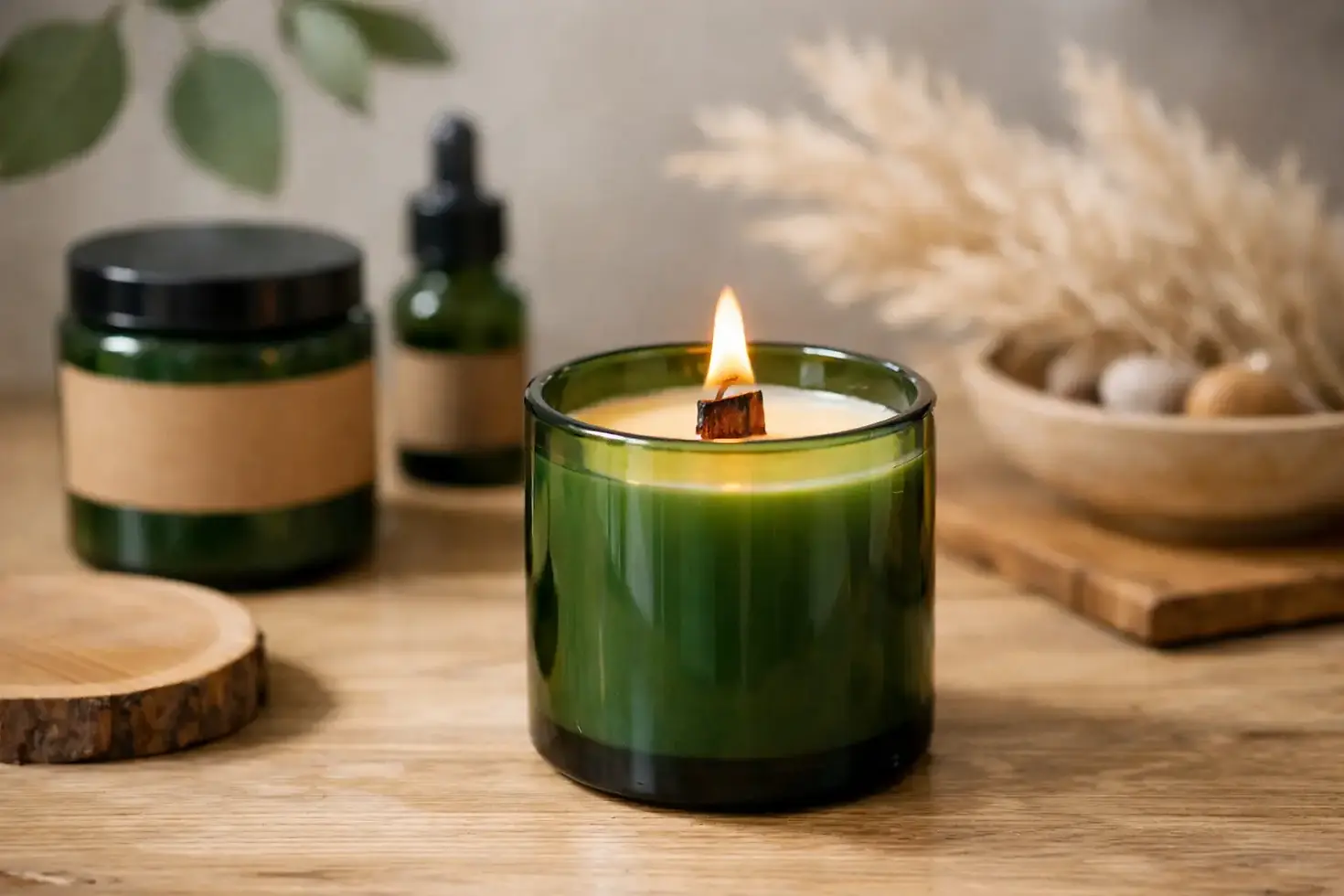
What Is a Wooden Wick Candle?

Some candles simply scent a room. Others change the feeling of it.
If you have ever lit one and heard that soft, fireplace-like crackle, you have probably asked, what is a wooden wick candle? At its core, it is a candle made with a thin strip of natural wood instead of a traditional cotton wick. But that simple switch changes more than the look of the flame. It changes the mood, the burn experience, and for many people, the entire ritual of lighting a candle at the end of the day.
A wooden wick candle feels a little more intentional from the first strike of the match. The flame sits lower and wider. The light often feels warmer. The sound is subtle, not loud, but enough to make a quiet evening feel even softer. That is the real appeal. It is not only about fragrance throw or aesthetics, though both matter. It is about atmosphere.
What Is a Wooden Wick Candle and How Does It Work?
A wooden wick candle uses a wick made from wood, often a thin single layer or a layered design, to draw melted wax upward and feed the flame. Like cotton wicks, wooden wicks rely on capillary action. The melted wax travels up the wick, the flame consumes the fuel, and the candle continues to burn.
The difference is in the material itself. Wood burns differently than braided cotton. It can create a gentle crackling sound, and it usually produces a broader, more horizontal flame shape. That wider flame can help melt wax across the surface more evenly, though the result also depends on the candle vessel, wax blend, fragrance load, and wick size.
This is why wooden wick candles often feel a bit more elevated. They are not just candles with a different wick for the sake of novelty. They are designed to offer a distinct sensory experience - one that feels cozy, polished, and quietly luxurious.
Why Wooden Wick Candles Feel Different
The most noticeable difference is the ambiance. A cotton wick candle can be beautiful and familiar, but a wooden wick candle tends to feel more immersive. The soft crackle adds a layer of comfort that many people associate with home, memory, and slowing down.
There is also the visual side of it. Wooden wicks often create a modern, clean-lined look inside the candle vessel. When unlit, they feel minimal and refined. When lit, the flame can appear fuller and more architectural than a standard wick. For gift-giving or a carefully styled bedside table, that detail matters.
Then there is the burn character. Many candle lovers find wooden wick candles especially appealing for evening rituals, reading, baths, or quiet moments when the room is meant to feel settled. The experience is less harsh, more grounded. It invites you to stay a while.
What Are Wooden Wick Candles Made Of?
Most wooden wick candles are made with the same essential components as other candles: wax, fragrance, a vessel, and a wick. The main distinction is the wick material. Wooden wicks are commonly made from untreated natural wood chosen for consistent burning.
The wax matters just as much as the wick. A wooden wick has to be paired thoughtfully with the right wax blend. Some waxes are softer, some denser, some more fragrance-forward, and each one affects how easily the wick stays lit and how evenly the candle burns. That is part of why wick testing is such a careful process in small-batch candle making. A wooden wick that performs beautifully in one formula may struggle in another.
Fragrance also plays a role. Heavier fragrance loads can affect burn behavior, and not every scent composition behaves the same way under heat. In a well-made candle, these elements are balanced with intention so the burn feels steady, clean, and enjoyable.
Wooden Wick vs. Cotton Wick
If you are deciding between the two, the answer is less about which is universally better and more about what kind of experience you want.
A cotton wick is classic, dependable, and familiar. It is often easier for beginners because it usually relights with less effort and can be more forgiving if candle care is inconsistent. If you occasionally forget to trim your wick or tend to burn candles in quick bursts, cotton may feel simpler.
A wooden wick candle, on the other hand, offers more character. The crackle, the glow, and the overall atmosphere are the main draw. It can feel more curated, especially for people who see candles as part of a self-care ritual rather than just a room freshener.
There are trade-offs. Wooden wicks can be a little more particular. They usually need to be trimmed short before each burn, and they may require patience during the initial light. If the wick is too long, the flame may struggle or extinguish itself. If it is properly maintained, though, the reward is often a beautiful, steady burn with a signature ambiance you do not quite get from cotton.
What Is a Wooden Wick Candle Best For?
Wooden wick candles are especially well suited for moments when mood matters as much as scent. Think evening wind-downs, slow Sunday mornings, bath rituals, dinner parties with low lighting, or gifting that feels personal and polished.
They also appeal to shoppers who care about aesthetics. A wooden wick instantly signals something a little more considered. It feels boutique. It feels like a candle chosen with intention, not grabbed in passing.
That said, they are not always the best fit for every setting. If you want a candle to burn quickly in a drafty kitchen while you clean, the nuance of a wooden wick may be lost. These candles shine in calmer spaces where the flame can settle and the crackle can be noticed.
How to Care for a Wooden Wick Candle
Good candle care makes a visible difference, especially with wooden wicks. The wick should be trimmed to about 1/8 inch before each burn. In practice, that means removing the burnt, fragile wood at the top so the wick stays short and clean.
The first burn is especially important. Let the melted wax reach close to the edges of the vessel to help prevent tunneling and create a more even burn pattern over time. Because wooden wicks can be more sensitive, it also helps to keep the candle away from fans, open windows, or strong air conditioning vents.
When relighting, hold the flame to the wick for a few extra seconds. A wooden wick often needs a little encouragement to catch properly across the surface. Once it does, it usually settles into its rhythm.
Are Wooden Wick Candles Better?
Sometimes yes, sometimes no. It depends on what you value.
If you want a candle that adds atmosphere, feels elevated, and turns a simple moment into something more comforting, a wooden wick candle can be a lovely choice. If you enjoy the idea of fragrance as part of a home ritual, not just background scent, it often feels worth it.
If your top priority is ease and low maintenance, you may still prefer cotton. Wooden wicks ask for a little care. They are charming, but not careless. For many candle lovers, that is part of the appeal. The ritual begins before the candle is even lit.
A well-crafted wooden wick candle also reflects the maker's attention to detail. Wick selection, wax blend, vessel size, and fragrance balance all have to work together. When they do, the result feels serene and memorable - the kind of candle that becomes part of your evening rather than just part of your decor.
For those drawn to clean luxury, sensory storytelling, and a softer pace at home, that distinction matters. At Gemini Ivy, wooden wick candles are designed with exactly that feeling in mind: one fragrance, one memory, one quiet moment that brings you back to yourself.
The best candle is the one that fits the life you want to create around it. If you want a flame that glows warmly, crackles softly, and makes home feel a little more like home, a wooden wick candle is a beautiful place to begin.


Comments